LGBTQ+ Egypt: “October Party” Coverage Revives the Queen Boat Playbook.
On April 25, 2026, Egyptian media reported that 26 people, including one woman, had been arrested inside a villa in 6th of October City, west of Cairo, over allegations that they attempted to organize an unlicensed private event “against public morals.”
Between April 26 and April 29, major Egyptian outlets published many stories, posts and updates on what they called the “October Party” or “Homosexuals Party” case. Reports said prosecutors initially ordered the defendants detained for four days pending investigation before a judge renewed their detention for 15 days on April 28. Some outlets reported that two foreign nationals were among those arrested.
Local media, citing investigators, also reported allegations that three people organized the event, attendance was promoted through a mobile app, tickets cost between 600 and 900 Egyptian pounds, and payments were made through mobile wallets. Police reportedly confiscated phones, 14 bottles of alcohol, feminine clothing, wigs and makeup from the villa.
The issue was not that outlets reported arrests or court decisions. Those are newsworthy. The issue was the imbalance of power in how the case was told. In a media environment where security narratives often shape public reporting, and where queer people and other targeted groups have little safe access to reply, repeated coverage can become a form of public prosecution.
Public curiosity is not public interest
The “October Party” case could have been covered through the facts available: 26 people arrested over allegations related to an unlicensed event, prosecutors ordering detention pending investigation, and courts reviewing the case. That frame would have helped readers understand what is known, what is alleged and what remains unproven.
Instead, many reports shifted attention toward clothing, wigs, makeup, alcohol, apps and dancing. These details were not simply included as background. They were arranged to make the gathering appear secretive, organized and threatening.
The coverage followed a familiar pattern. A police allegation was first presented as a legal matter, then expanded through details that suggested secrecy, sexuality and social danger.
Terms such as “public morals” and “debauchery” did not simply describe the case. They shaped how the public was invited to read it: as a threat, not as an unresolved legal process.
That distinction matters. The reported claims remain allegations. A raid does not establish guilt, and morality language should not be treated as neutral fact.
A pattern sharpened by Cairo 52
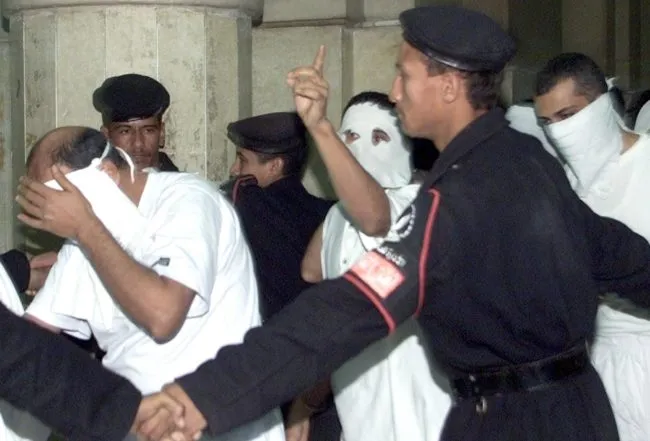
This pattern took one of its clearest modern forms in the Queen Boat case. On May 11, 2001, Egyptian authorities raided the Queen Boat, a Nile venue in Zamalek, Cairo. The case became known internationally as Cairo 52, after 52 men were prosecuted.
Human Rights Watch later documented how the case became a media spectacle, with names, faces and alleged private lives exposed in ways that damaged people long after the court process ended. The organization also reported allegations of torture and abuse in detention.
The same logic returned in 2017 after rainbow flags were raised at a Cairo concert by the Lebanese band Mashrou’ Leila. The moment was followed by arrests and a wave of media panic. Human Rights Watch reported mass arrests after the concert, while Amnesty International said some detainees were subjected to forced anal examinations, a practice rights groups describe as torture and scientifically baseless.
Sarah Hegazi, an Egyptian queer activist arrested after the concert, later lived in exile in Canada and died in 2020. Her story remains a reminder that exposure, state violence and stigma can outlive the news cycle.
The 2020 Fairmont Nile City sexual assault case showed another version of the same mechanism. Fairmont was not an anti-LGBTQ+ case in origin. Its relevance lies in how a case that should have centered allegations of gang rape, class power and accountability was partly redirected toward the sexuality, private lives and morality-related accusations against witnesses and people around them.
Human Rights Watch reported that Egyptian security agencies arrested witnesses and acquaintances, pursued morality-related accusations, and that pro-government media smeared people connected to the case.
Fairmont was not another Cairo 52. But it showed how quickly attention can move away from violence and accountability toward sexuality, HIV status, stigma and suspicion.
Media must stop recreating Cairo 52
The danger of the “October Party” coverage is not only that it reported police allegations. Journalists can report on arrests, courts and state power. The danger is that much of the reporting adopted the framing of the accusation.
In Egypt, where queer and gender-nonconforming people can face arrest, outing, family violence, blackmail, job loss and online harassment, this is not simply poor reporting. It is reporting that can put lives at risk, while those who fuel the panic often face little accountability.
Responsible journalism would distinguish allegations from established facts. It would avoid identifying details that serve no public interest. It would not treat clothing, makeup or gender expression as evidence of criminality.
It would ask whether detainees had access to lawyers, whether searches were lawful, whether statements were coerced, and whether coverage could expose people to harm.
The lesson of Cairo 52 should have been clear: public humiliation is not journalism. Egyptian media must stop recreating the Cairo 52 pattern and panic. People accused under vague morality laws are not material for viral punishment.